

Most of the time, one can very clearly make out that a person has cervical spondylosis. What is the opposite, though, when ‘back’ is just ‘back’? The afflicted person may forget about previous backache injuries and sometimes, at the moment of doing something, may express astonishment, saying, “Oh, that really hurts!” A herniated or ruptured disc happens when part of the spinal disc bulges or ruptures and pinches or presses on something else, such as nerves. Therefore, sometimes symptoms are not only physical in nature. Rather, it requires knowing some critical signs of a Herniated Disc to handle the situation timely and avert long-term ailments.
Five essential identifiers would be presented as learned from this article, which is then followed by the reasons as to why we should all watch out for them, when we should take up the services of a qualified general practitioner, and what actions should be taken now to keep one’s spine strong.
In a hurry? Call us at +186-3324-0000 now!
What Are the Signs of a Herniated Disc?
A herniated disc is a condition where one of those cushiony discs between your vertebrae slips out of place or leaks inner material. It is simple; they act like shock absorbers for the spine, and when the outer ring cracks or the gel inside bulges, it directly increases pressure on the nerves, which causes real problems. The signs of a Herniated Disc tell you which nerves may be implicated and the degree of pressure inflicted.
Sign #1: Sharp or Burning Pain Radiating
Radiation of pain is often one of the signs of a Herniated Disc pain which does not stay in one spot. If the bulge is in the lumbar region, pain might be felt running down the buttock, thigh, or calf region. With neck problems, pain may radiate towards the shoulder or arm. Normally, pain worsens with coughing, sneezing, or bending forward. This kind of radiating pain is an irritation of the nerves, not just muscle spasms, and is thus one of the strongest pointers to something serious.
Sign #2: Numbness/Tingling
Numbness or tingling in your arms, hands, legs, or feet is another serious red flag. The nerve pathway is disturbed. You may feel a “pins and needles” sensation, or your limb may feel like it’s asleep. Muscle fatigue is not the case; it’s mostly the case of such pressure on nerves. Once you notice an alteration in your sensation, it is time to pay attention.
Sign #3: Muscle Weakness & Reflexes Lost
Nerves signal muscles to do work. Muscle weakness is a telltale sign of a herniated disc. Some may experience difficulty lifting something easily once carried, or it may be just weaker than it used to be. Some may have “foot drag,” or have difficulty standing on one leg. Sunk reflexes, like that of the knee jerk, are signal forewarnings of nerve involvement. Have your check-up if weakness is then accompanied by signs.
Sign #4: Pain Plus Further Movement, Sitting, or Coughing
Some maneuvers elevate the pressure on the spine and worsen symptoms. Such pain-making incidents constitute a key sign of a Herniated Disc. Bending forward, rotating one’s torso, coughing, sneezing, or prolonged sitting will typically worsen the condition. These pain triggers are not symptoms of normal muscle soreness; they point to something deeper. If any of these maneuvers trigger your symptoms, it’s a solid hint that your disc is likely herniating.

In a hurry? Call us at +186-3324-0000 now!
Sign #5: Symptoms Persist Without Improvement
Typical back pain becomes much better in about a week or two. If presenting both or just one of the first four signs, but your symptoms do not resolve with time or get worse, that is a really big warning sign. This just stands as another key sign of Herniated Discs. If rest, movement, or very basic forms of treatment did not help, it calls for a complete assessment. Early therapy usually results in a faster and more satisfying recovery.
When to Consult a Professional?
When several of these signs present together, and especially if there is weakness or loss of sensation, then it becomes time to see a medical provider. Early attention to nerve involvement or persistent pain may mean that mild symptoms will take care of themselves over time and basic care. However, if you ever lose bladder or bowel control instantly, lose feeling around your groin, or have weakness in the legs that develops quickly, you should immediately seek assistance. Such symptoms can indicate the serious condition of cauda equina syndrome.
At the assessment, the provider will check your reflexes, strength of muscles, sensation, among a few others, and might order imaging like an MRI scan to track the location of the herniation. Learning the signs of a Herniated Disc and getting help early gives you a real shot at keeping you mobile and avoiding long-term problems.
Service Change and Update
Evaluate your symptoms-it may help to clarify when they began, how long they lasted, and which actions exacerbated them. Do not engage in heavy lifting or awkward bending, or any activity you know will elicit pain or tingling. Maintain an upright posture and take breaks throughout the day to avoid too much sitting.
While not substitutes for professional evaluation, early management schemes can be applied pending your evaluation. After the evaluation, the provider may prescribe certain exercises, rehabilitative physical therapy, etc.
How Can Chiropractic Care Help in the Recovery From a Herniated Disc?
Chiropractic treatment can facilitate your recovery by way of conserving your efforts, during which you might show the first signs of a herniated disc.
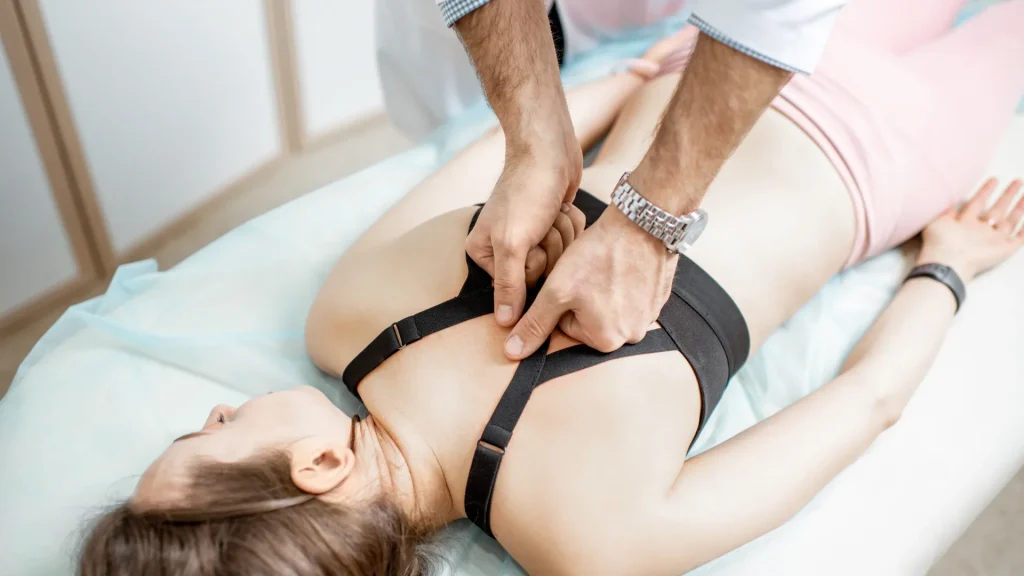
A licensed chiropractor takes diagnostics, follows it with the assessment of the spine, nerves, and posture, and finds out whether or not the herniated disc has actually induced nerve irritation or limited range of motion. Then, in case such an idea has been substantiated, spinal adjustments, decompression therapy, or resistance exercises can be recommended to relieve pressure on those nerves and restore proper alignment.
The importance of chiropractic care comes in when pain, tingling, numbness, or weakness persists, which are signs usually related to nerve involvement. From here, early intervention via chiropractic management may advance improvements in mobility, reduce inflammation, and facilitate natural healing before any surgical consideration.
It should be noted that if these severe neurological symptoms include loss of bowel/bladder control or sudden weakness, then urgent medical attention with possible integration of chiropractic treatment should be sought.
In a hurry? Call us at +186-3324-0000 now!
Final Thoughts
The earlier the intervention is done, when signs of a herniated disc start showing, the less the pain will be, and the quality of life will be improved. Do not ignore these signs, especially when these signs last for a long time or worsen; take them seriously. With timely diagnosis and adequate treatment, an improved prognosis can be obtained, and a safe recovery will be ensured. Listen to your body; seek proper evaluation and move ahead with clarity and confidence.
Your Cypress Chiropractic and Wellness in Davenport is here for you if you have a couple of the above-mentioned signs. The loving and compassionate team here can help you regain your activity level. Schedule your appointment today!
FAQ: How can chiropractic care support recovery from a herniated disc?
Chiropractic care offers non-surgical relief when you experience the signs of a herniated disc. A licensed chiropractor begins by assessing your spine, nerves, and posture to pinpoint whether the disc is irritating nearby nerves or limiting your movement. They may use spinal adjustments, decompression therapy, or targeted exercises to ease nerve pressure and restore proper alignment.
Chiropractic care proves especially helpful when you feel ongoing pain, tingling, numbness, or weakness—strong indicators of nerve involvement. Early treatment improves mobility, reduces inflammation, and supports the healing process without turning to surgery right away.
However, if you notice severe neurological symptoms such as sudden muscle weakness or loss of bowel or bladder control, seek urgent medical care. In those cases, you may need chiropractic care combined with other medical treatments for safe recovery.